
.svg)
BELLE Research Project: Depot Charging as the Key to Electrifying Heavy-Duty Trucks
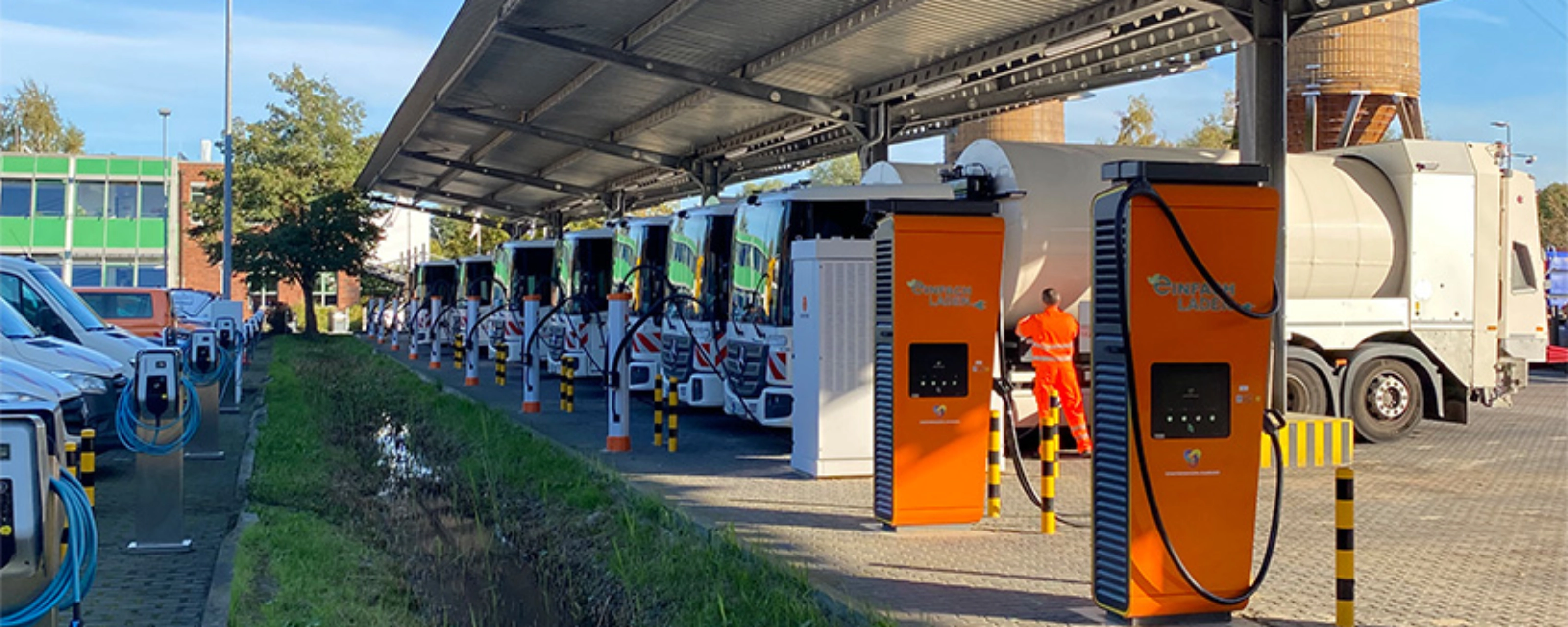
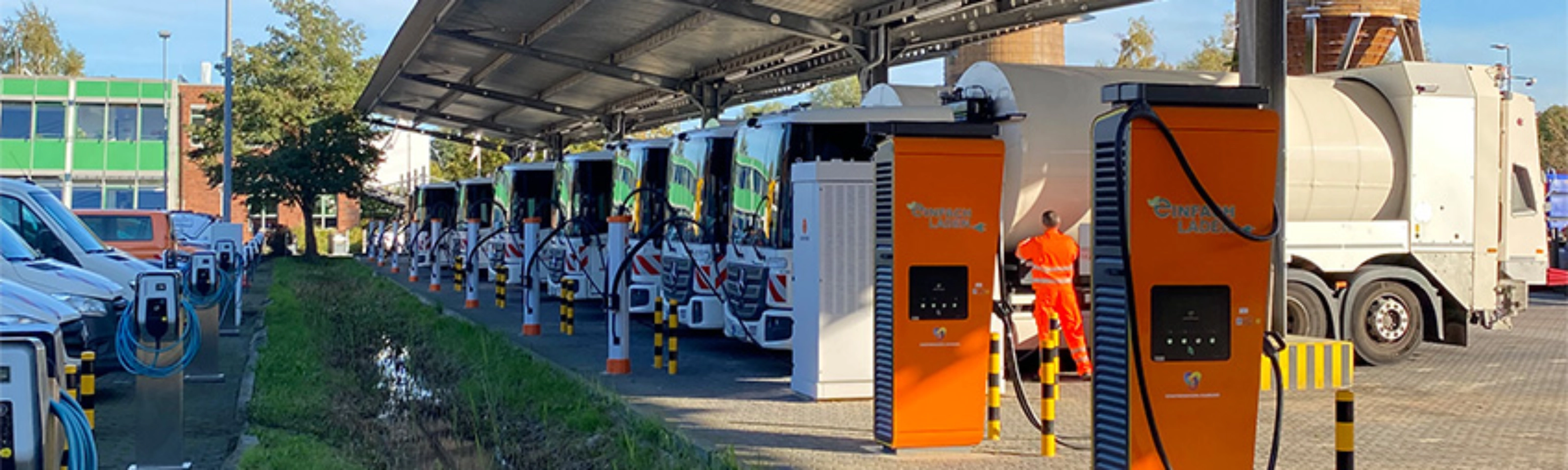
Image: (c) Marc Weider (NOW GmbH)
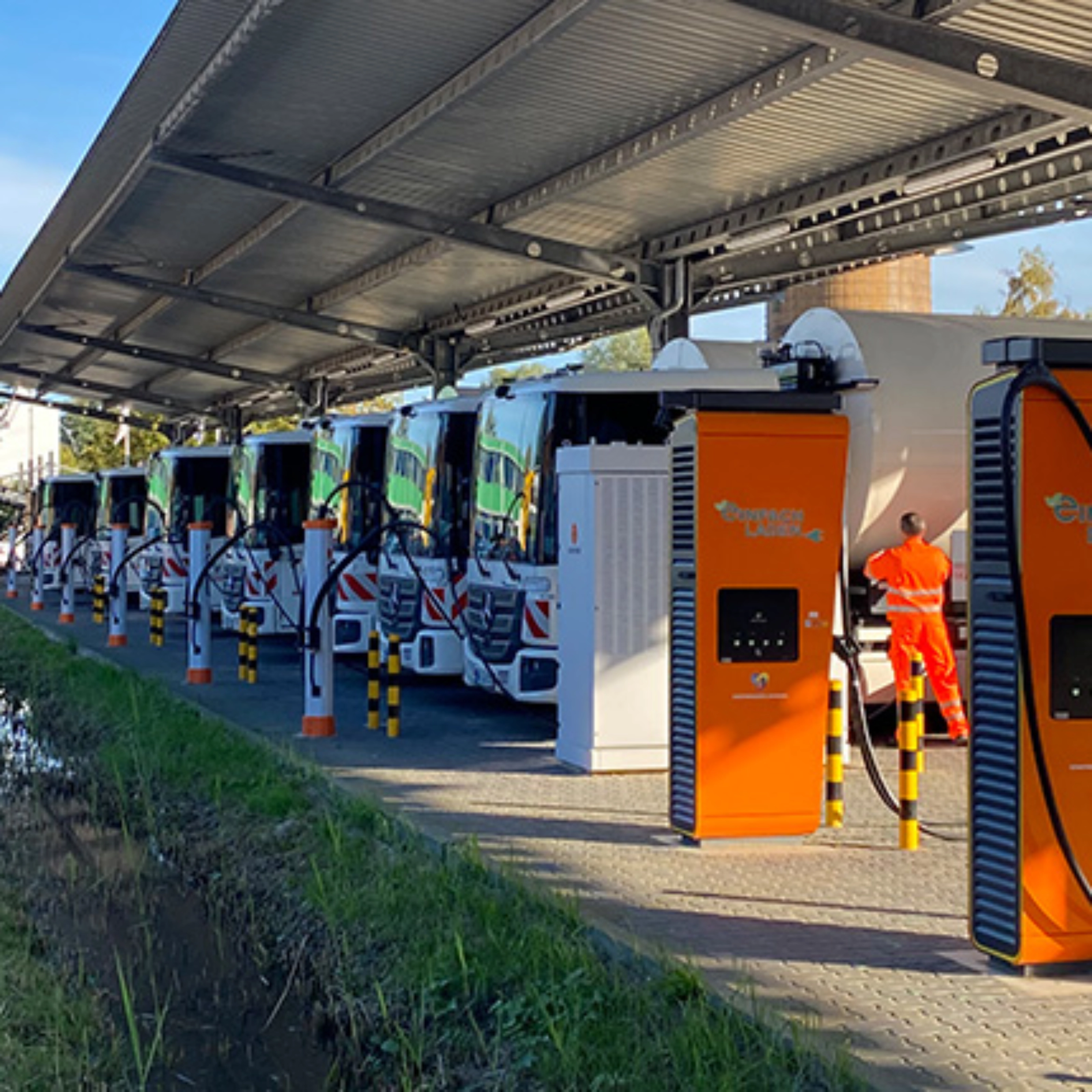
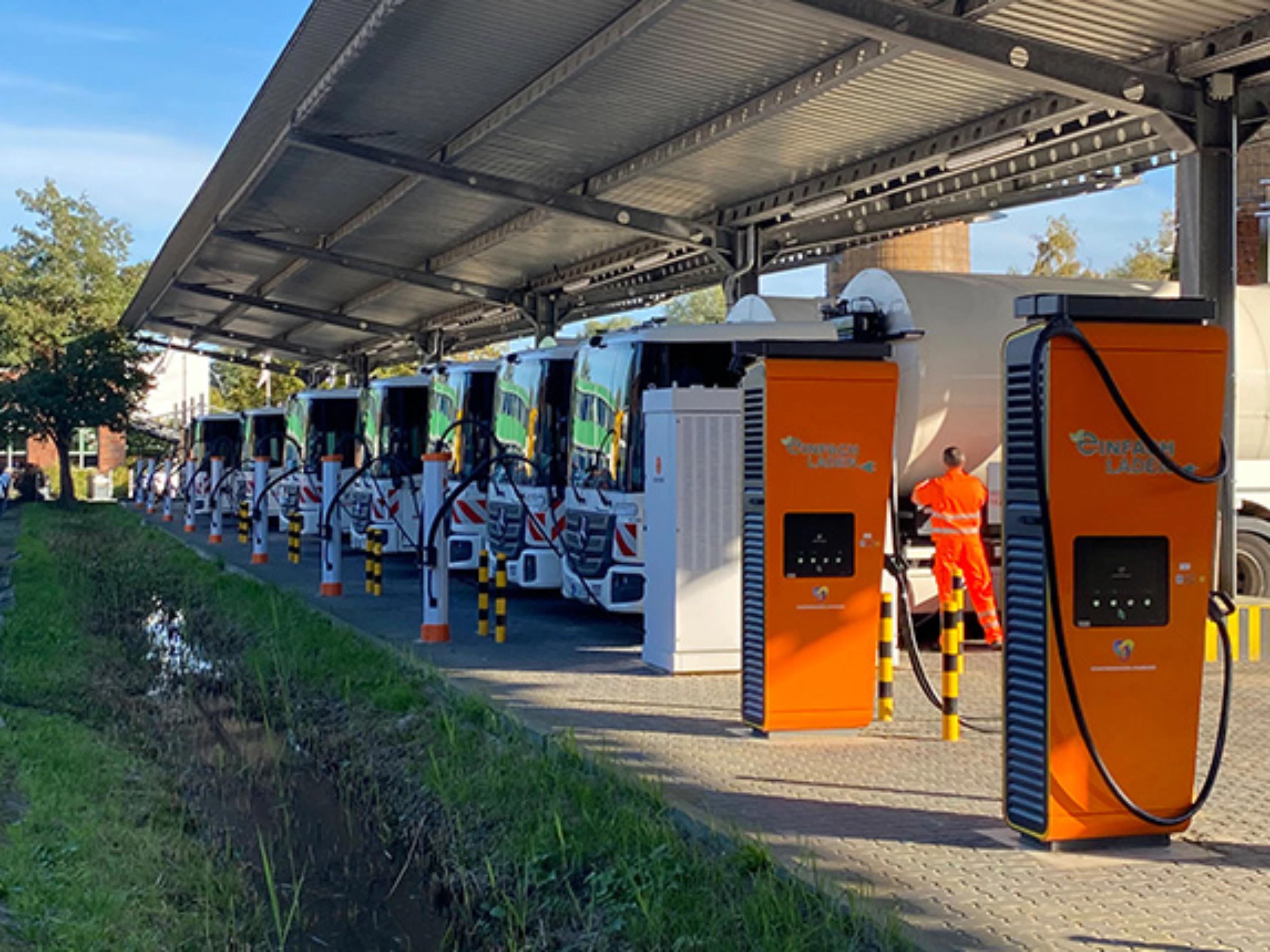
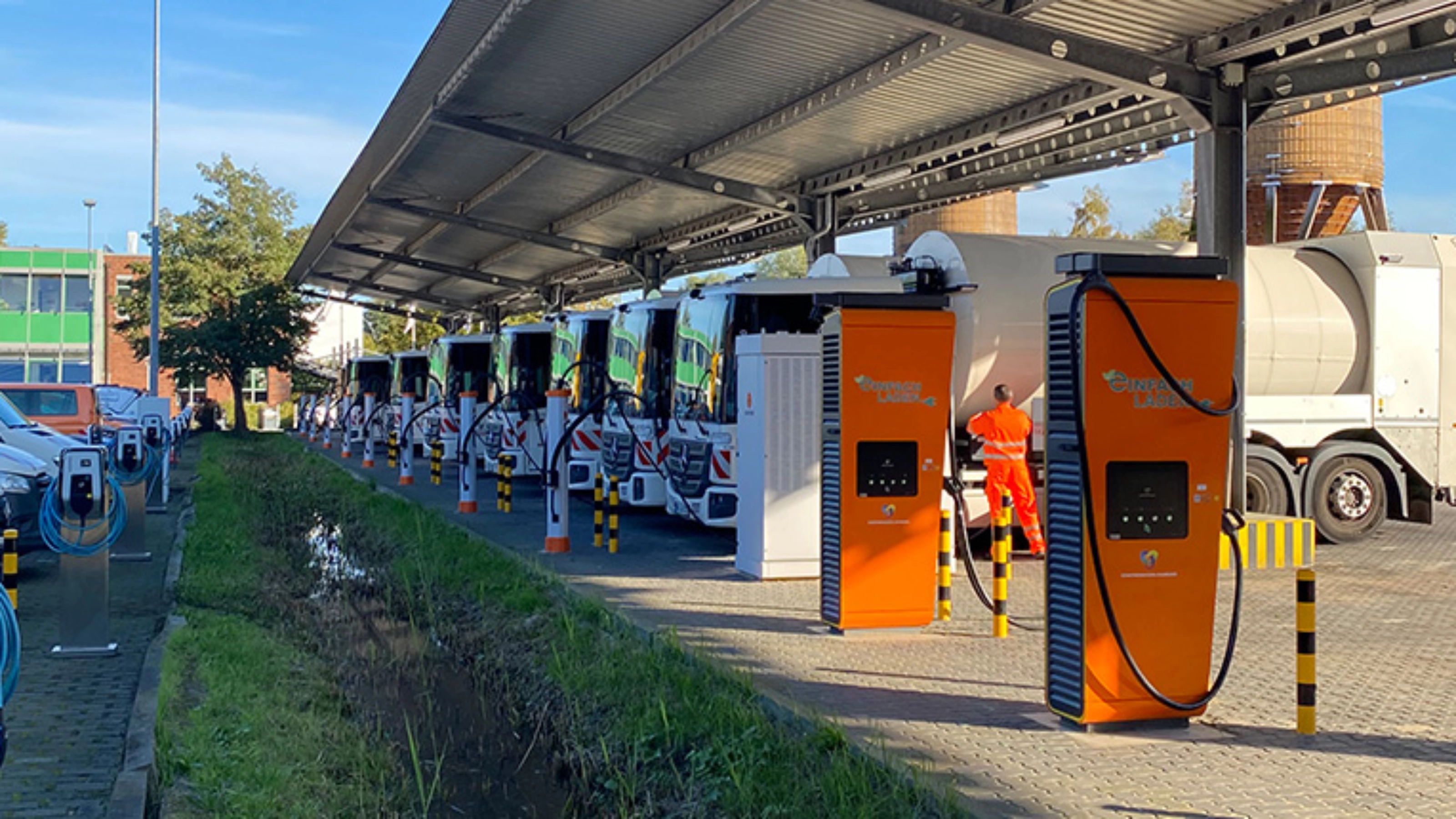
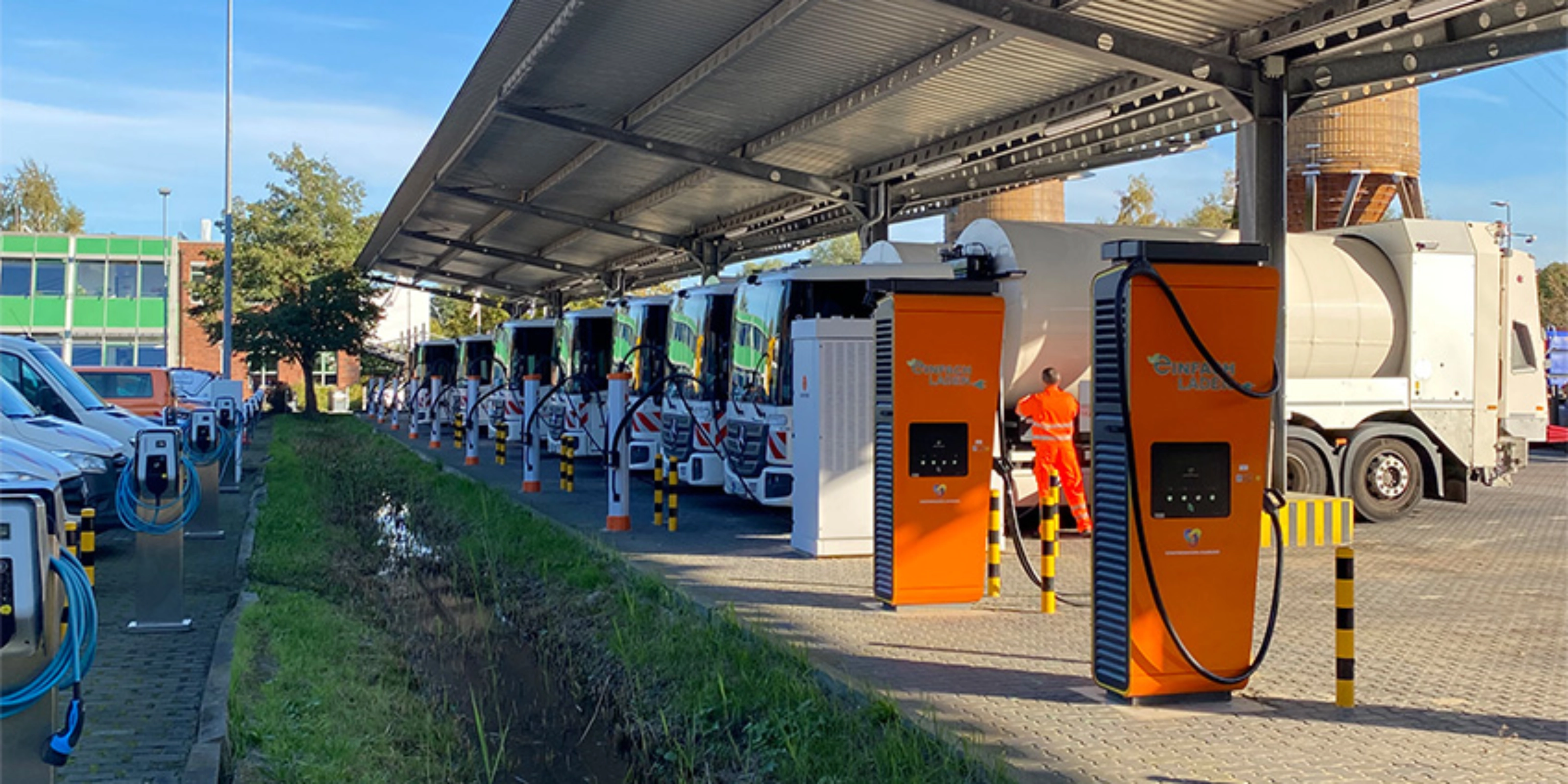
After several years of research and demonstration activities, the BELLE project (Betriebshofelektrifizierung – Ladeinfrastruktur und Lastmanagement in der praktischen Erprobung), which focuses on depot electrification, charging infrastructure, and load management in real-world operations, has been successfully completed. The project aimed to develop practical solutions for electrifying commercial vehicle depots and translate the findings into recommendations that companies and public-sector stakeholders can apply.
After several years of research and demonstration activities, the BELLE project (Betriebshofelektrifizierung – Ladeinfrastruktur und Lastmanagement in der praktischen Erprobung), which focuses on depot electrification, charging infrastructure, and load management in real-world operations, has been successfully completed. The project aimed to develop practical solutions for electrifying commercial vehicle depots and translate the findings into recommendations that companies and public-sector stakeholders can apply.

The project examined depot electrification from technical, economic, and operational perspectives. Key areas of focus included charging infrastructure design, load and charging management, the integration of electric vehicles into existing operations, and the economic viability of operating electric trucks.
According to the researchers, one of the project's key findings is that the transition to alternative powertrains in freight transport depends on more than just the vehicles themselves. Reliable energy and charging infrastructure, along with intelligent operational processes, are equally essential. The research is intended to demonstrate that depot charging is a critical prerequisite for the widespread adoption of battery-electric commercial vehicles in many applications.
BELLE also provides important insights into economic viability. According to the researchers, the project findings show that battery-electric commercial vehicles can already be operated cost-effectively in numerous applications. Additional opportunities could arise from leveraging greenhouse gas (GHG) emission reduction credits, making charging infrastructure available to third parties, and, in the longer term, providing flexibility services to support the power grid.