








IAA TRANSPORTATION Weekly | 47/2026
BAIC FOTON, Kia, ASTAG Charge
BAIC FOTON unveils megawatt charging technology for electric trucks, the Kia PV5 Chassis Cab gets a larger battery and faster AC charging, and ASTAG Charge launches a truck charging network with 200 charging points in Switzerland. These are our top news stories for week 47 of 2026.
BAIC FOTON unveils megawatt charging technology for electric trucks, the Kia PV5 Chassis Cab gets a larger battery and faster AC charging, and ASTAG Charge launches a truck charging network with 200 charging points in Switzerland. These are our top news stories for week 47 of 2026.
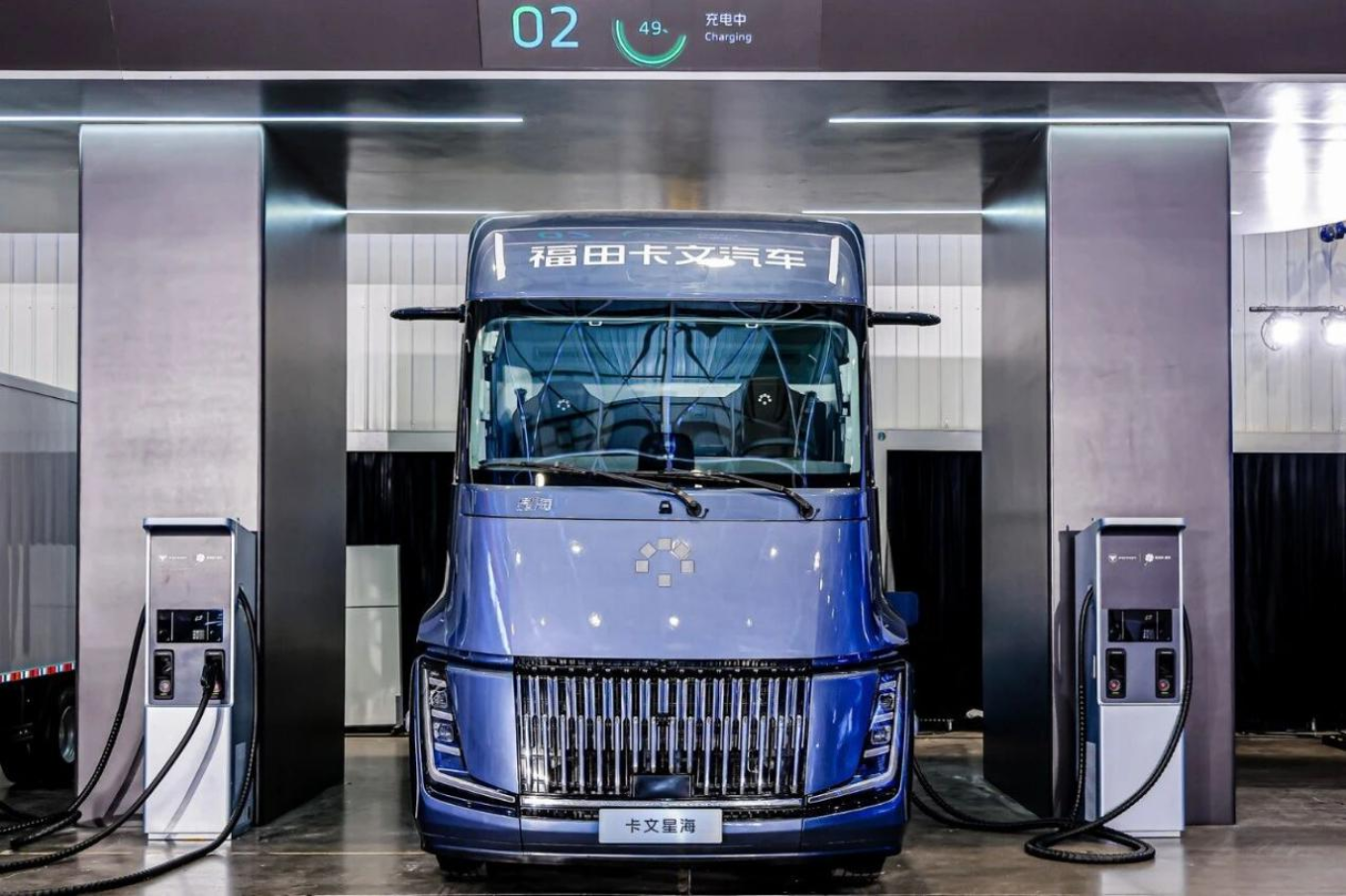
Chinese commercial vehicle manufacturer BAIC FOTON has unveiled a new fast-charging strategy and presented several electric trucks equipped with megawatt charging technology. The focus is on the AUMARK Z light-duty electric truck and the AUMAN GALAXUS and CAVAN BEACON heavy-duty electric trucks. With charging power of up to 1.5 megawatts and a connected energy management system, the company aims to reduce charging times and accelerate the expansion of charging infrastructure. BAIC FOTON also plans to deploy more than 3,000 charging units outside China by 2027.
The new fast-charging architecture is based on an 800-volt system designed to support voltages of up to 1,000 volts and charging currents of up to 1,600 amperes through two charging ports. The new AUMARK Z is expected to achieve a peak charging power of 1.05 megawatts and an 8C charging rate. This would allow its battery to charge from 20 to 80 percent in just eight minutes. For the AUMAN GALAXUS and CAVAN BEACON heavy-duty electric trucks, BAIC FOTON claims that enough energy for approximately 100 kilometers of range can be added in six minutes. The batteries are designed to support charging rates exceeding 4C and withstand more than 6,500 charging cycles.
At the same time, BAIC FOTON is developing a connected energy management system that links vehicles, charging stations, power grids, and cloud platforms. The so-called Vehicle-Charger-Grid-Cloud architecture is designed to coordinate charging processes and energy flows. According to the manufacturer, the system is supported by more than 3.5 million connected vehicles and 770,000 charging ports. BAIC FOTON is also working on integrated solar, energy storage, and charging stations. Together with CATL, Sunwoda, TELD, and Hunan Jingneng, the company has established an industry alliance aiming to build 5,000 standardized, integrated charging stations.
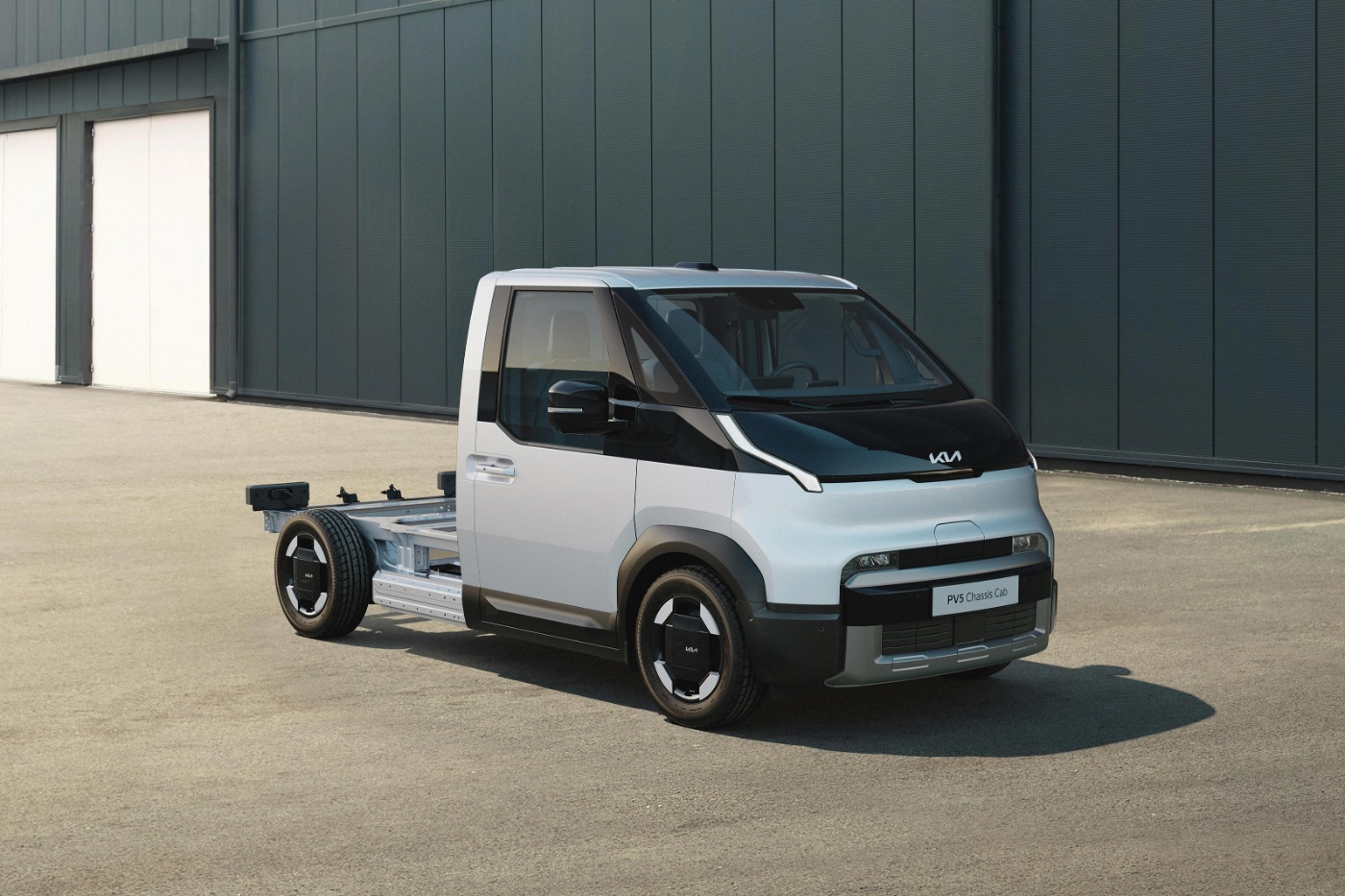
Kia is expanding its all-electric PV5 Chassis Cab lineup for the 2027 model year with an additional 71.2-kWh battery option and an optional 22-kW onboard charger. The chassis cab will also offer a towing capacity of up to 1.5 metric tons and expanded standard equipment. The new model year is already available to order, with the first deliveries scheduled for February 2027.
The front-wheel-drive PV5 Chassis Cab will be available with two battery sizes. The standard version combines a 51.5-kWh battery with an 89-kW (122-hp) electric motor, while the new long-range version features a 71.2-kWh battery and a power output of 120 kW (163 hp). Both variants can be charged from 10 to 80 percent in approximately 30 minutes at a suitable DC fast-charging station. The optional 22-kW onboard charger is designed to reduce AC charging times by up to 45 percent. With the larger battery, charging from 10 to 100 percent takes approximately three hours and 35 minutes. Kia has not yet announced specific range figures for the chassis cab. As a reference, the PV5 Cargo L2H1 achieves WLTP ranges of up to 297 and 416 kilometers with the two battery options, respectively.
Based on the E-GMP.S platform, the chassis supports various body configurations, including flatbeds, tippers, and box bodies with up to eight cubic meters of cargo space. The maximum payload, including the weight of the body, is up to 1,005 or 900 kilograms, depending on the battery variant. Expanded standard equipment includes a rearview camera, a 12.9-inch infotainment system, and additional driver assistance systems. The Plus trim level also offers Vehicle-to-Load (V2L) functionality and hardware preparation for bidirectional charging via Vehicle-to-Home (V2H) and Vehicle-to-Grid (V2G). Production of the 2027 model year begins in November 2026.
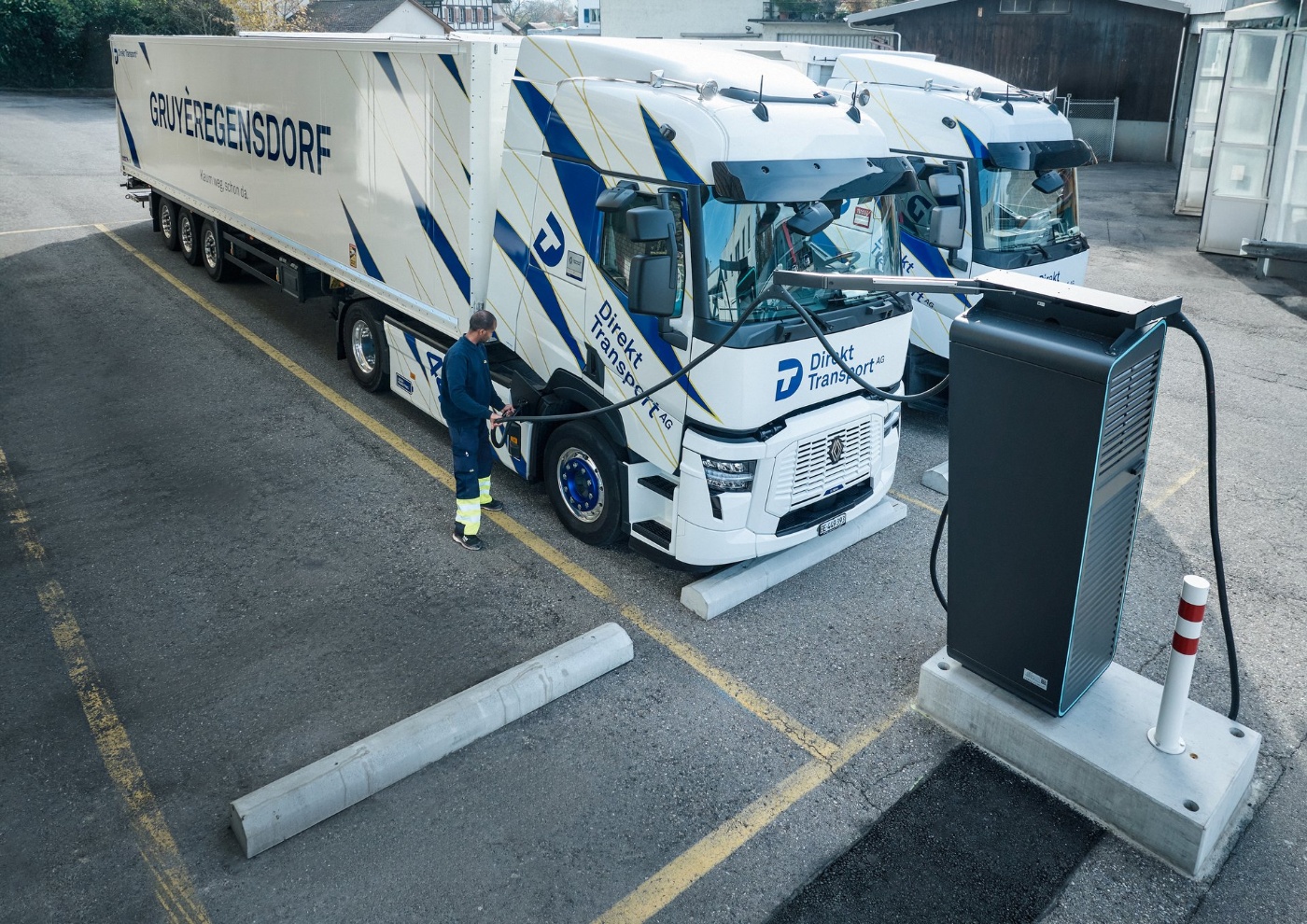
The Swiss Commercial Vehicle Association ASTAG has launched ASTAG Charge, a shared charging network for electric trucks. At launch, 100 companies are already participating, representing a total of 585 electric trucks and approximately 200 charging points across 60 locations. The platform allows association members to make their existing charging infrastructure available to other transport companies. The goal is to make better use of unused charging capacity, create additional charging options for electric commercial vehicles, and reduce charging costs.
The network is powered by the Depotcharge platform developed by Munich-based Evolve Energy. It connects logistics companies with available charging capacity to fleet operators that need additional charging options while on the road. Participating companies can digitally reserve available charging slots and use the corresponding charging points. Site operators determine their own access hours and charging prices. Charging point activation and billing are also handled through the platform. According to the operators, there are no setup fees or fixed recurring charges. Costs generally arise only when the charging infrastructure is actually used.
ASTAG Charge brings together two previously separate Swiss charging initiatives. In addition to the network established by the commercial vehicle association ASTAG, the Utopia project, developed by energy company Repower together with logistics providers DPD and G. Leclerc Transport, will also be integrated. Both initiatives already use Depotcharge technology and will operate under the shared ASTAG Charge brand going forward. The technical integration is scheduled for December 1, 2026. Participation will remain exclusive to ASTAG members. The association has approximately 3,700 members and partner organizations across Switzerland, which collectively operate around 30,000 commercial vehicles.