
.svg)







IAA TRANSPORTATION Weekly | 23/2026
Stellantis, MAN & Dettendorfer Energy, CATL, Scania
The newly founded "Green Brenner Initiative" by MAN Truck & Bus, Dettendorfer Energy GmbH, and other partners aims to accelerate the deployment of battery-electric trucks along the Brenner corridor and establish the route as a model region for zero-emission logistics; CATL launches a battery-swapping system for light electric trucks in South China; and Scania demonstrates bidirectional megawatt charging for heavy-duty electric trucks—these are our top news stories for week 23 of 2026.
The newly founded "Green Brenner Initiative" by MAN Truck & Bus, Dettendorfer Energy GmbH, and other partners aims to accelerate the deployment of battery-electric trucks along the Brenner corridor and establish the route as a model region for zero-emission logistics; CATL launches a battery-swapping system for light electric trucks in South China; and Scania demonstrates bidirectional megawatt charging for heavy-duty electric trucks—these are our top news stories for week 23 of 2026.
- 1. Stellantis Pro One Plans Product Lineup with 11 New Commercial Vehicles by 2030
- 2. Green Brenner Initiative: Electric Trucks Aim to Make Transit Traffic More Climate-Friendly
- 3. CATL Launches Battery-Swapping System for Light Electric Trucks in South China
- 4. Scania Demonstrates Bidirectional Megawatt Charging for Heavy-Duty Electric Trucks
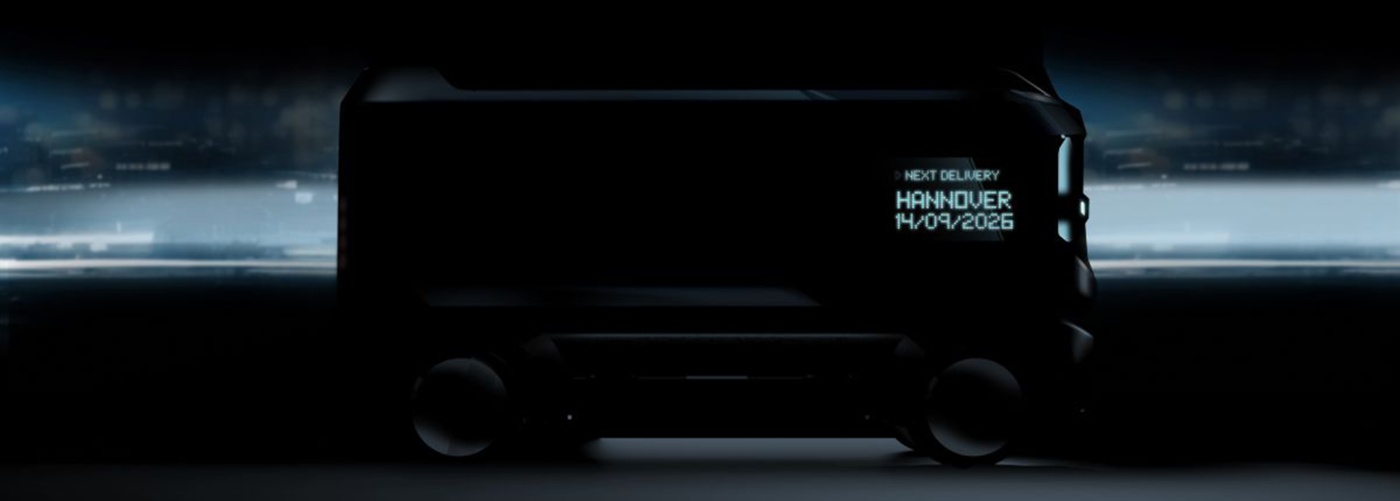
Stellantis Fleet Pro One just unveiled its growth strategy until 2030. At the heart of the plan are 11 new commercial vehicle models, digital fleet services, and the autonomous "Box-on-Wheels" concept vehicle, which is set to make its debut at IAA TRANSPORTATION 2026.
The company plans to launch next-generation medium and large vans built on multi-energy platforms. These will feature battery-electric, hybrid, and conventional powertrains, all powered by the STLA Brain software architecture. In addition, Stellantis Pro One announced a new small van, an update to its compact van lineup, and new electric drive systems equipped with LFP and NMC batteries.
The pickup truck business is also slated for expansion. Plans include next-generation versions of the Fiat Strada and Fiat Toro in South America, the North American launch of the Ram Rampage, and a new mid-size pickup platform.
With its "Pro One NEXT" digital ecosystem, Stellantis also aims to deliver connected fleet services, real-time vehicle monitoring, over-the-air updates, and integrated charging, financing, and service packages. This ecosystem will be backed by a global network of roughly 21,000 service touchpoints. Meanwhile, the autonomous "Box-on-Wheels" concept will offer a glimpse into the future of mobility and logistics solutions for commercial transport.
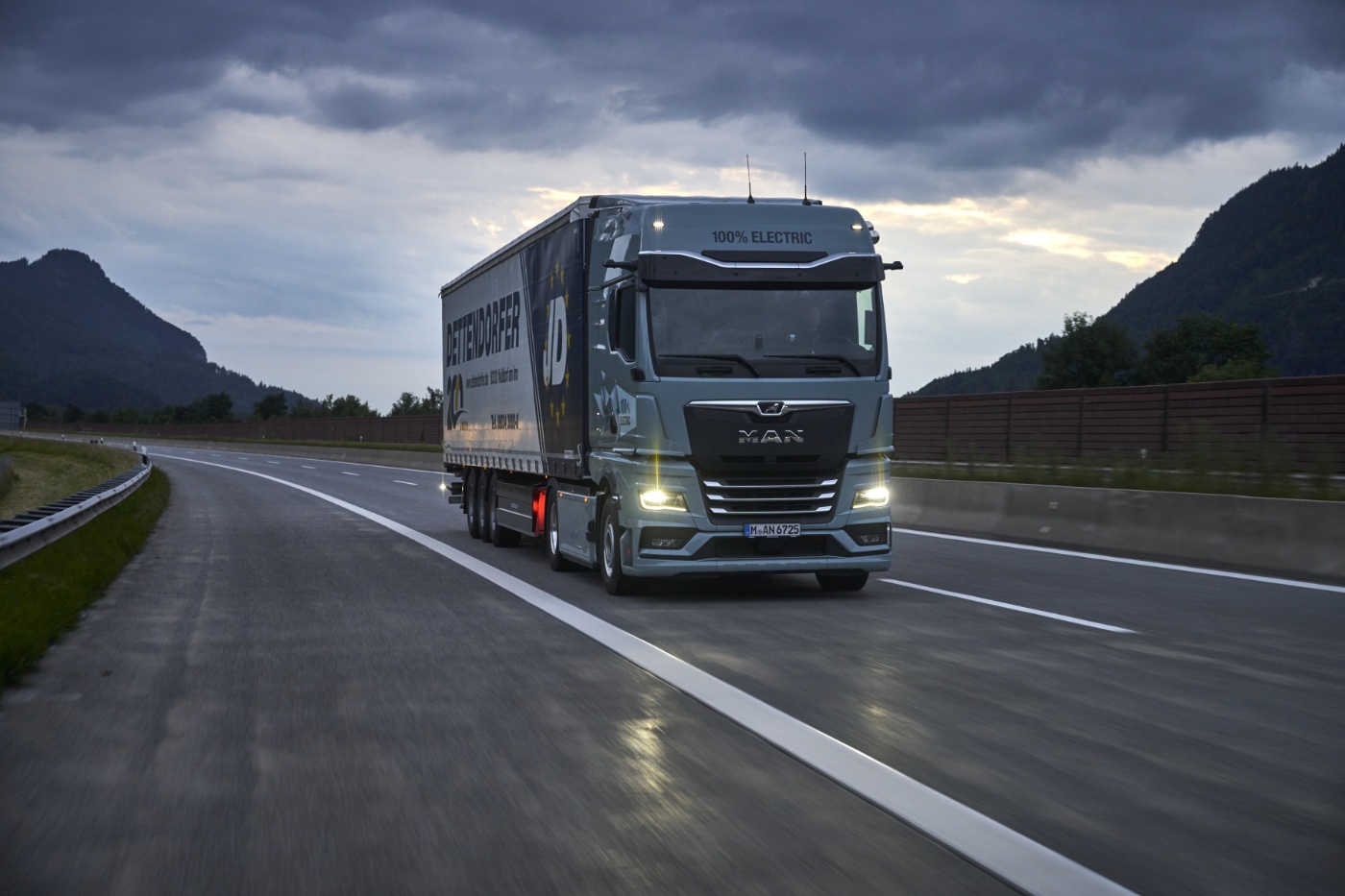
The newly founded "Green Brenner Initiative" by MAN Truck & Bus, Dettendorfer Energy GmbH, and other partners aims to accelerate the deployment of battery-electric trucks along the Brenner corridor and establish the route as a model region for zero-emission logistics.
According to the initiative, an electric truck traveling around 110,000 kilometers annually saves up to 95 metric tons of $CO_2$ per year. Deploying just 300 electric trucks daily could reduce emissions on the Brenner route by up to 28,000 metric tons of $CO_2$ annually. At the same time, electric trucks generate about 12.6 decibels less noise during acceleration and are subjectively perceived as being roughly half as loud as diesel vehicles.
The partners also see economic benefits: energy costs are expected to be around 40 percent lower than those of a diesel truck. Thanks to regenerative braking, up to 40 percent of the energy used can be recovered on the mountainous Brenner route. On top of that, toll costs for electric trucks are currently about 80 percent lower. Overall, the total cost of ownership (TCO) over three years is expected to be roughly 20 percent lower than for comparable diesel vehicles.
The initiative views itself as a complement to rail transport and aims to enable more climate-friendly shipping even before the completion of the Brenner Base Tunnel. At the same time, the project is intended to serve as a blueprint for other European transport corridors.
Battery giant CATL, in partnership with logistics company DST, has launched the first standardized battery-swapping system for light electric trucks in South China. The project focuses on the Greater Bay Area around Guangdong, Hong Kong, and Macau. The network already includes 31 battery-swapping stations and is projected to grow to 140 locations by the end of 2026.
The infrastructure will be used by a future fleet of 5,000 light electric trucks and is based on CATL’s Choco-SEB battery-swapping system. The modular stations are designed for both passenger cars and light commercial vehicles with wheelbases between 2.7 and 3.75 meters, supporting the 25# and 35# battery types.
The fully automated battery swap is expected to take just two minutes. While the 25# battery was originally developed for passenger cars, the 35# battery was specifically designed for light electric trucks. By expanding the network, CATL aims to further accelerate the electrification of logistics fleets and establish battery swapping as an alternative to conventional charging in the commercial vehicle segment.
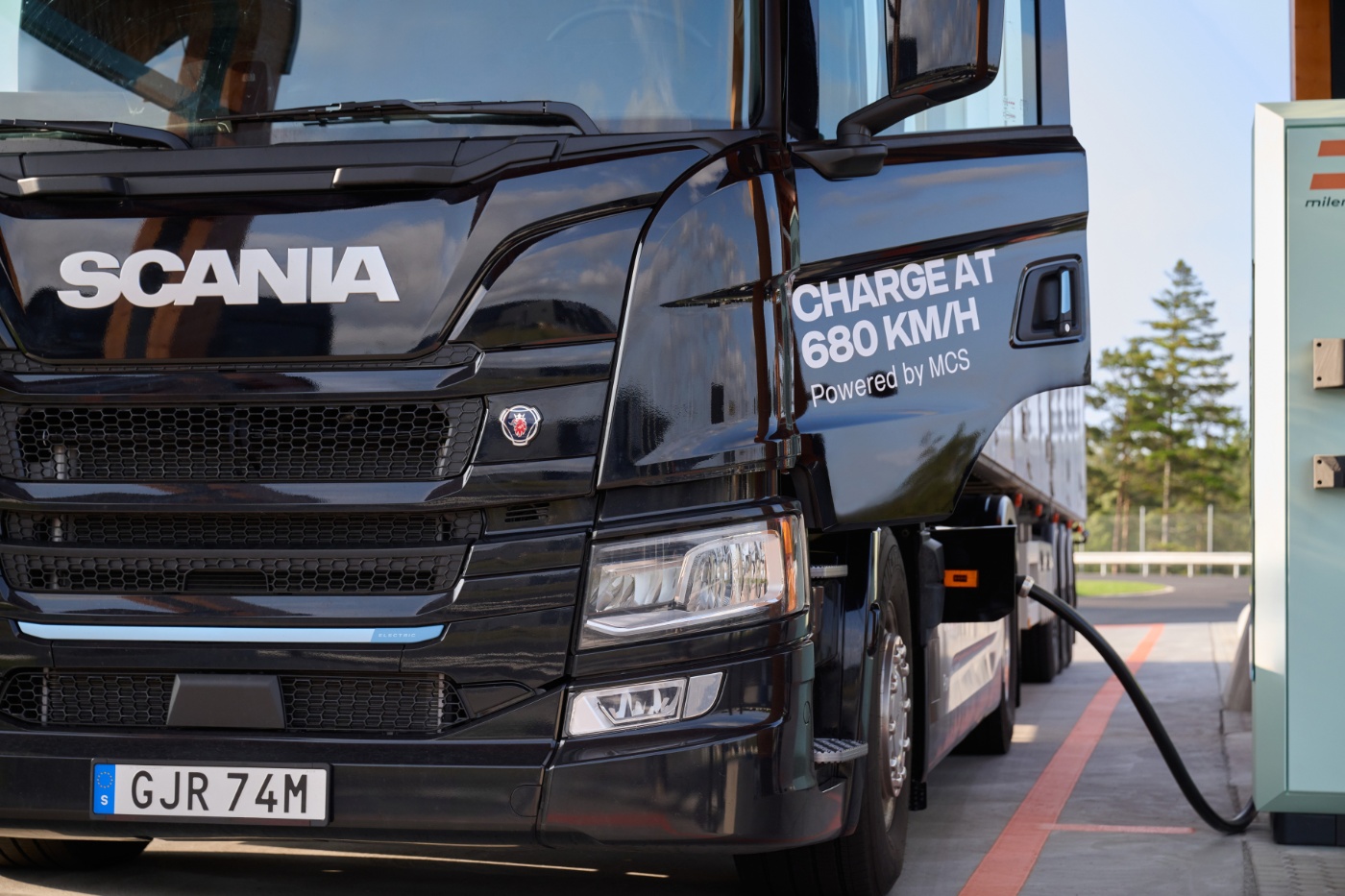
Scania has successfully demonstrated a vehicle-to-grid (V2G) application for heavy-duty electric trucks based on the new Megawatt Charging System (MCS) for the first time. Charging and discharging capacities reached up to 1,000 amps and 750 kW, respectively. According to the company, this ranks among the world's first bidirectional applications of the MCS standard in heavy-duty transport.
The technology enables real-time communication between the vehicle, charging infrastructure, and energy management systems, allowing charging and discharging processes to be dynamically adjusted to transport tasks and grid demands. This is powered by the Megawatt Charging System (MCS), which is considered the new industry standard for fast-charging electric trucks and buses, and is expected to enable charging capacities of up to 3.75 MW in the long term.
Scania sees particularly high potential in depot charging. There, parked vehicles can be used as mobile energy storage systems, feeding surplus energy back into the power grid or the site infrastructure. The combination of megawatt charging, bidirectional energy flow, and smart energy management is expected to further improve the cost-efficiency of electric commercial vehicle fleets and create additional revenue streams for operators.